
The Lagotto is the right dog for allergy sufferers

Lagotto cane anallergico
Are you an allergy sufferer looking for the perfect dog for you?
Choose a Lagotto Romagnolo as your hypoallergenic dog!
Dog allergies are more common in Italy than you might think, with estimates of over 500,000 Italians affected.
While there is no true hypoallergenic dog breed, some breeds may produce smaller amounts of allergens that may be suitable for those with allergies, and in general, their anatomical structure appears to be free of all the factors that can contribute to triggering allergies. If your home needs a four-legged friend but you're concerned about potential allergic reactions, the Lagotto Romagnolo is probably the breed for you.
Let's find out together why the Lagotto is defined as a hypoallergenic dog.
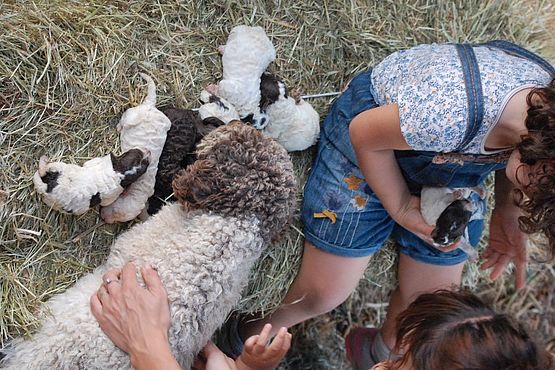
Il lagotto appartiene alle razze di cane ipoallergeniche
Fortunately, some breeds are better suited than others for allergy sufferers.
The complexity of pet allergies can be daunting, but research has improved our understanding and provides solutions to facilitate optimal coexistence with our dogs.
People with dog dander allergies may experience an immune system reaction when exposed to allergenic proteins found in the animal's blood, urine, saliva, and other secretions. Furthermore, mites present on the animal's fur can exacerbate symptoms such as respiratory inflammation. Finally, it's important to note that clothing can act as a host for allergens due to its propensity to collect not only dander and hair, but also various bodily fluids, which are highly sensitizing.
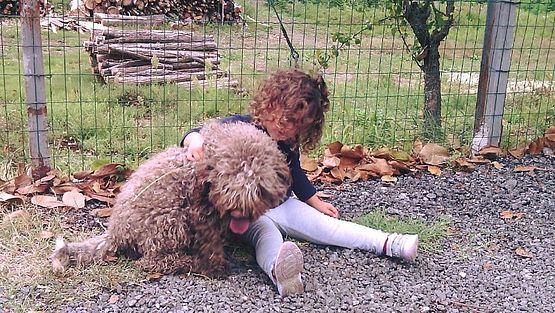
il lagotto non perde pelo ed ha un bassissimo rilascio di cellule di sfaldamento dalla cute e dai follicolipiliferi.
Are you allergic to dogs? The answer lies in IgE antibodies that react with specific proteins present in the animal's blood and secretions. These allergens are also found on their coat and clothing, where they can easily spread through the air or settle in fabrics. Furthermore, mites that live on your pet's fur may induce an inflammatory response: a sign of possible allergies among dog owners around the world!
Hypersensitivity to male dogs' fur (much more than females) is a prime example; males are known to secrete higher amounts of allergenic compounds on average.
Fortunately for those who suffer from this condition and their canine companions, these substances can be significantly reduced by neutering a male pet, thus allowing both owners and dogs to enjoy the comfort of each other.
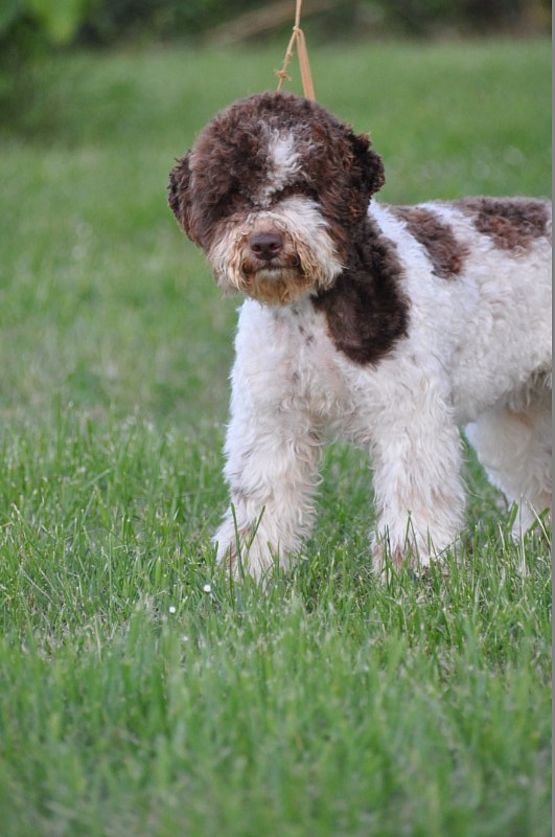
La razza del Lagotto Romagnolo appartiene al gruppo di razze indicate per soggetto allergici
Don't let fear come between you and your furry companion: explore safe paths to living happily together!
Although symptoms may vary from person to person, a correct diagnosis and targeted treatment are essential to allow a person sensitive to allergies to reap all the benefits associated with having man's best friend in their life.
When someone discovers they are allergic to a pet, this usually leads to them being deprived of their possessions.
A strong distrust of them will also predictably follow, leading to fear and avoidance.
It is important to identify the allergen causing the reaction so that the best course of action can be determined.
Allergic individuals are commonly sensitive to a few main allergens, Can f2 and Can f4, which come from saliva and flaking skin and hair, respectively.
33% have an allergic response due specifically to Canf2, while as many as 60% may show sensitivity when directly exposed to Canf4.

Il lagotto è un cane adatto anche ai neonati i quali tollerano in maniera totale la sua basa dose di allergeni
However, going into specifics and recap, we can say that we are mainly dealing with six allergens linked to the CANf protein, of which only three cause a widespread and, in some cases, intense allergic response in the population.
These are:
Can F 1
It is secreted by the salivary glands and is certainly the most widespread. 44% of allergic people are sensitive to Can f1. Dogs lick themselves and spread the allergen on their skin, coat, and then throughout their environment. It is highly resistant to heat and water during grooming.
Can F 2
This allergen is also produced in the salivary glands. Its prevalence in the population is estimated at 33%.
Transmission in the environment is similar to that of Can F 1, but fortunately, it is easier to eliminate from the environment.
Can F 4
It is produced directly by the skin and by shed cells from the skin and hair follicle.
It is estimated that 60% of subjects are sensitive to Can F 4, as previously reported.
Immunotherapeutic treatment through vaccines offers a solution;
Another option is selecting hypoallergenic breeds such as the Lagotto Romagnolo for closer contact with these beloved animals, without the discomfort caused by allergies!